Islamic Phrases and Their Meanings for Beginners
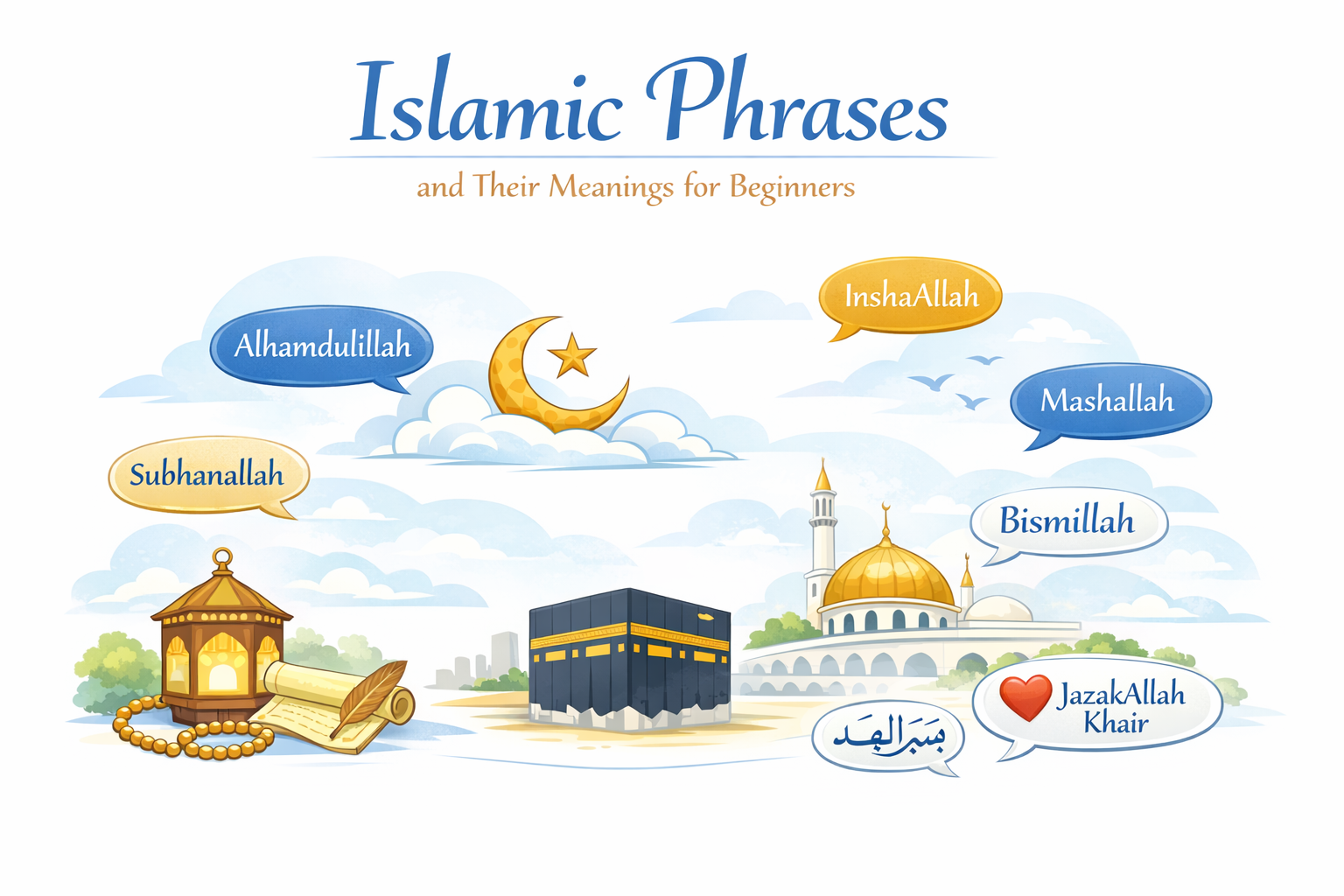
🌿 Common Islamic Phrases Every Beginner Should Know
Meaning
Alhamdulillah means “All praise and thanks belong to Allah.” It is a simple way for Muslims to express gratitude — for big blessings, small moments, and even difficult situations.
When Muslims Say It
People say Alhamdulillah when:
something good happens
they finish a task
they feel grateful
they recover from hardship
they want to remember Allah in daily life
It is also said after sneezing, after eating, and when someone asks, “How are you?”
Why It’s Beautiful
This phrase reminds the heart to stay thankful. It teaches patience, contentment, and trust in Allah’s plan — even when life is not perfect.
Simple Examples
“I got the job — Alhamdulillah.”
“The weather is nice today — Alhamdulillah.”
“I’m feeling better — Alhamdulillah.”
“Even in hard times, Alhamdulillah for everything.”
Meaning
Mashallah means “What Allah has willed.” It is said when noticing something beautiful, impressive, or blessed — to acknowledge that the goodness comes from Allah.
When Muslims Say It
People say Mashallah when:
complimenting someone
seeing something beautiful
hearing good news
admiring a child, home, achievement, or blessing
wanting to avoid jealousy or the evil eye
It is a gentle way of showing appreciation without arrogance.
Why It’s Beautiful
This phrase protects the heart from envy. It reminds us that every blessing — beauty, success, talent, health — comes from Allah, not from ourselves.
Simple Examples
“Your baby is so cute — Mashallah.”
“You did great on your exam — Mashallah.”
“Your new home looks amazing — Mashallah.”
“Mashallah, what a peaceful view.”
Meaning
Subhanallah means “Glory be to Allah” or “Allah is perfect and free from any flaw.” It is a phrase Muslims use when they see something amazing, beautiful, or when they reflect on the greatness of Allah.
When Muslims Say It
People say Subhanallah when:
seeing something beautiful in nature
feeling amazed or overwhelmed
witnessing something extraordinary
remembering Allah’s perfection
expressing humility and awe
It is also part of daily dhikr (tasbeeh).
Why It’s Beautiful
This phrase softens the heart. It reminds us that everything beautiful — sunsets, kindness, miracles, blessings — all reflect Allah’s perfection. It brings calmness and helps the mind return to gratitude.
Simple Examples
“Look at the stars tonight — Subhanallah.”
“This view is incredible — Subhanallah.”
“Subhanallah, the baby is so peaceful.”
“Subhanallah, everything happens with wisdom.”
Meaning
InshaAllah means “If Allah wills” or “God willing.” Muslims say it when talking about something in the future, because nothing happens unless Allah allows it.
When Muslims Say It
People say InshaAllah when:
making plans
promising to do something
hoping for a good outcome
talking about future goals
expressing trust in Allah’s timing
It is a reminder that we plan, but Allah is the One who makes things happen.
Why It’s Beautiful
This phrase brings peace to the heart. It teaches humility — we don’t control everything. It also teaches hope — we trust that Allah will bring what is best at the right time.
Simple Examples
“I’ll see you tomorrow, InshaAllah.”
“We will finish the project soon, InshaAllah.”
“InshaAllah, everything will work out.”
“I hope to visit you next month, InshaAllah.”
Meaning
Bismillah means “In the name of Allah.” Muslims say it before starting anything important — eating, working, travelling, studying, or even small daily tasks.
When Muslims Say It
People say Bismillah when:
beginning a meal
starting a task or project
leaving the house
opening a book or starting work
beginning something new
wanting Allah’s blessing and protection
Why It’s Beautiful
This phrase brings barakah (blessing) into whatever you are about to do. It turns ordinary actions into acts of worship. It also creates a moment of calm before starting something.
Simple Examples
“Bismillah, let’s begin.”
“Before eating: Bismillah.”
“Bismillah, I’m starting my work.”
“Bismillah, may this go well.”
Meaning
Astaghfirullah means “I seek forgiveness from Allah.” Muslims say it when they feel they’ve made a mistake, want to purify their heart, or simply want to return to Allah with humility.
When Muslims Say It
People say Astaghfirullah when:
they slip, sin, or speak wrongly
they feel regret or guilt
they want Allah’s mercy
they want to calm their heart
they want to remove stress or negative thoughts
they are doing daily dhikr
It is both a spiritual reset and a moment of honesty with oneself.
Why It’s Beautiful
This phrase brings relief. It reminds us that Allah is always ready to forgive — no matter how many times we fall. It softens the heart, cleans the soul, and brings peace after mistakes.
Simple Examples
“Astaghfirullah, I shouldn’t have said that.”
“Astaghfirullah, forgive me for my shortcomings.”
“Feeling stressed? Say Astaghfirullah.”
“Astaghfirullah, guide me and make things easy.”
Meaning
JazakAllah Khair means “May Allah reward you with goodness.” It is the most beautiful and respectful way for Muslims to say thank you.
When Muslims Say It
People say JazakAllah Khair when:
someone helps them
someone gives advice
someone does a kind action
someone shares knowledge
they want to show sincere gratitude
It is deeper than “thank you” — it is a dua.
Why It’s Beautiful
This phrase doesn’t just express gratitude. It asks Allah to reward the person with goodness in this life and the next. It strengthens relationships and spreads kindness.
Simple Examples
“JazakAllah Khair for your help.”
“JazakAllah Khair for the reminder.”
“JazakAllah Khair, that was very kind of you.”
“JazakAllah Khair for supporting me.”
Meaning
Allahumma Barik means “O Allah, bless it” or “May Allah put blessings in it.” It is a dua Muslims say when they see something good and want Allah to increase it in goodness.
When Muslims Say It
People say Allahumma Barik when:
complimenting someone
seeing something beautiful or impressive
wanting to protect someone from envy
admiring a blessing
wishing good for others sincerely
It is often used together with Mashallah.
Why It’s Beautiful
This phrase is pure kindness. It shows you are not just admiring something — you are asking Allah to protect it, grow it, and keep it safe. It spreads love, sincerity, and good intentions.
Simple Examples
“Your recitation is beautiful — Allahumma Barik.”
“Your children are so polite — Allahumma Barik.”
“What a peaceful home — Allahumma Barik.”
“Allahumma Barik, may Allah increase your success.”
Meaning
La ilaha illallah means “There is no god worthy of worship except Allah.” It is the foundation of Islam — the core message of all prophets.
When Muslims Say It
People say La ilaha illallah when:
remembering Allah
calming their heart
feeling stressed or overwhelmed
renewing their faith
doing dhikr
wanting to strengthen their connection with Allah
It is a phrase of peace and certainty.
Why It’s Beautiful
This phrase brings deep spiritual comfort. It reminds the heart that Allah is in control, that life has purpose, and that true peace comes from Him alone.
Simple Examples
“La ilaha illallah, everything is in Allah’s hands.”
“Feeling anxious? Say La ilaha illallah.”
“La ilaha illallah, this life is temporary.”
“La ilaha illallah, Allah is enough for me.”
🌙✨ How These Phrases Bring Peace Into Daily Life
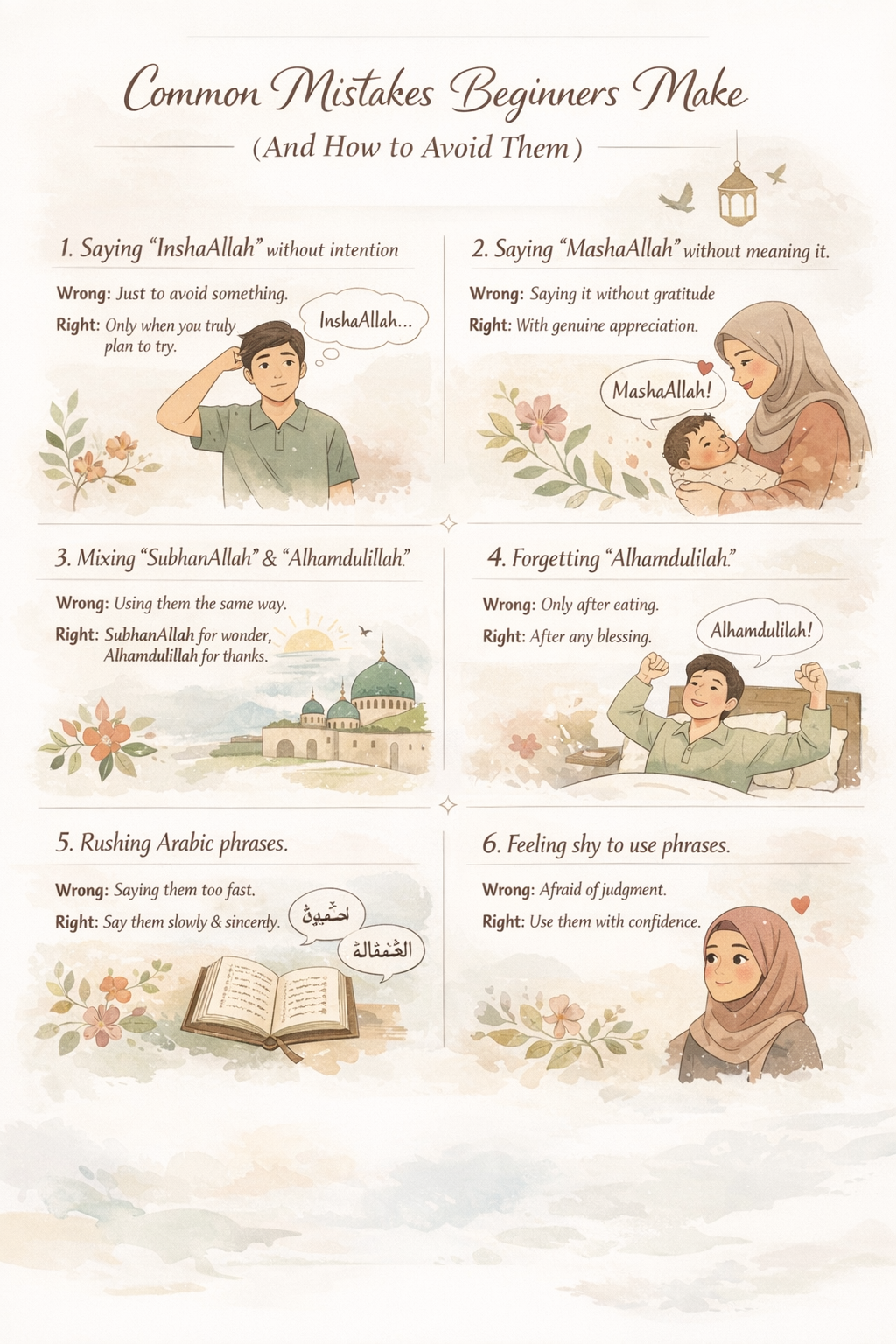
❗ Common Mistakes Beginners Make
(And How to Avoid Them)
Mistake: Using InshaAllah as a polite way to avoid something.
Correct way: Say InshaAllah only when you genuinely intend to try
Mistake: Using it automatically without feeling gratitude.
Correct way: Say MashaAllah when you truly appreciate something good.
Mistake: Using them interchangeably.
Correct way:
SubhanAllah → when something is amazing
Alhamdulillah → when you feel grateful
Mistake: Only saying it after food.
Correct way: Say it after any blessing — waking up, finishing work, arriving safely.
Mistake: Trying to sound fluent.
Correct way: Use them slowly, naturally, and with sincerity.
Mistake: Thinking others will judge.
Correct way: Use them gently — people respect sincerity.
📘 Frequently Asked Questions (FAQ)
🌺 Conclusion: A Gentle Beginning to Your Islamic Journey
These Islamic phrases are more than expressions — they are small moments of connection. Every time you say Alhamdulillah, SubhanAllah, or InshaAllah, you bring a little more peace, gratitude, and mindfulness into your day.
You don’t need perfect Arabic. You don’t need to memorize everything at once. You just need a sincere heart and a willingness to learn.
With time, these phrases will become natural, comforting, and part of your everyday rhythm — guiding your intentions and softening your heart.
About Us
Disclaimer